
Standing outside the modest, grey-stone walls of the Ecumenical Patriarchate, you’d never guess you were at the “Vatican of the East.” It is the essential Istanbul paradox: the spiritual center for 300 million Orthodox Christians tucked away behind a gate that looks more like a side entrance to a quiet garden. While the crowds at Hagia Sophia are busy navigating three-hour security lines, the Patriarchate remains a sanctuary of heavy silence and flickering candlelight, hidden in plain sight along the Fener waterfront, providing a sharp contrast to The Grease and Iron of My Favorite Walk Through Perşembe Pazarı.
Last Tuesday, I hopped off the T5 tram at the Fener station around 10:45 AM. The Golden Horn was particularly glassy, reflecting the colorful, slightly leaning houses that define this neighborhood. I walked the two minutes inland, passing a small workshop where a man was meticulously repairing a cane chair, and reached the Patriarchate’s entrance. There was no queue—just a polite security check and the immediate, heady scent of beeswax.
Inside the Church of St. George, the atmosphere shifts from the chaotic buzz of the city to something ancient and immovable. The gold leaf on the 18th-century iconostasis glows under the dim chandeliers, but it doesn’t feel like a museum. It feels like a living room for the soul. I usually drop 25 TL (about $0.55) into the box for a thin sand-colored candle to light near the entrance. It’s a small ritual that grounds you before you start looking at the relics, including the Column of Flagellation.
Fener itself can be a bit of a maze if you aren’t careful. The steep, cobblestone streets behind the Patriarchate are beautiful but punishing on the knees. If you’re coming from Sultanahmet, avoid taking a taxi during the afternoon rush; the coastal road becomes a parking lot by 4:00 PM. Instead, use the ferry or the tram. It costs less than a Euro and saves you the frustration of watching the meter climb while you sit stationary. Once you step out of the church, the neighborhood opens up into a blend of Greek heritage and modern bohemian life. The trick is knowing when to lean into the history and when to just sit by the water with a glass of tea, watching the ferries cut through the wake of the city’s relentless pace.
Arriving via the Golden Horn Waterfront
Skipping the erratic bus schedules of Eminönü in favor of the T5 Tram is the only way to arrive at the Patriarchate without losing your sanity to Istanbul’s notorious traffic. The T5 line tracks the edge of the Golden Horn (Haliç), offering a panoramic view that beats any taxi ride. I usually tell my friends to hop on at the Eminönü terminus; last Tuesday, I clocked the journey at exactly 12 minutes. Compare that to a taxi, which took me nearly 30 minutes the week before because a delivery truck decided to double-park near the spice market. If you are coming from the Sultanahmet side, taking the T5 tram is your most reliable logistics play. At roughly 23 TL for a single ride (about 0.50 USD or 0.45 EUR), it is the most budget-friendly scenic tour in the city.
The Four-Minute Walk to the Gate
Once you step off at Fener Station, the Patriarchate is tucked away behind the first row of buildings across the coastal road. The transition from the breezy waterfront to the dense, historic fabric of Fener is sudden. You will need to cross Abdulezelpaşa Caddesi, where drivers often treat the asphalt like a private racetrack. Practical fix: Don’t try to dash through the gaps; walk fifty meters to the designated pedestrian signal. It adds sixty seconds to your trip but saves you a lot of stress.
Look for the small green park directly opposite the tram platform. From there, you will spot the distinctive brown ‘Patrikane’ signs. Follow these into the narrow streets. It takes exactly 4 minutes to reach the main gate from the tram stop. If you find yourself surrounded by colorful wooden houses and the smell of fresh simit from the local bakeries, you’re heading the right way. The entrance to the Ecumenical Patriarchate is intentionally modest—a set of heavy gates that blend into the stone walls—so keep your eyes sharp or you might walk right past the center of the Orthodox world.
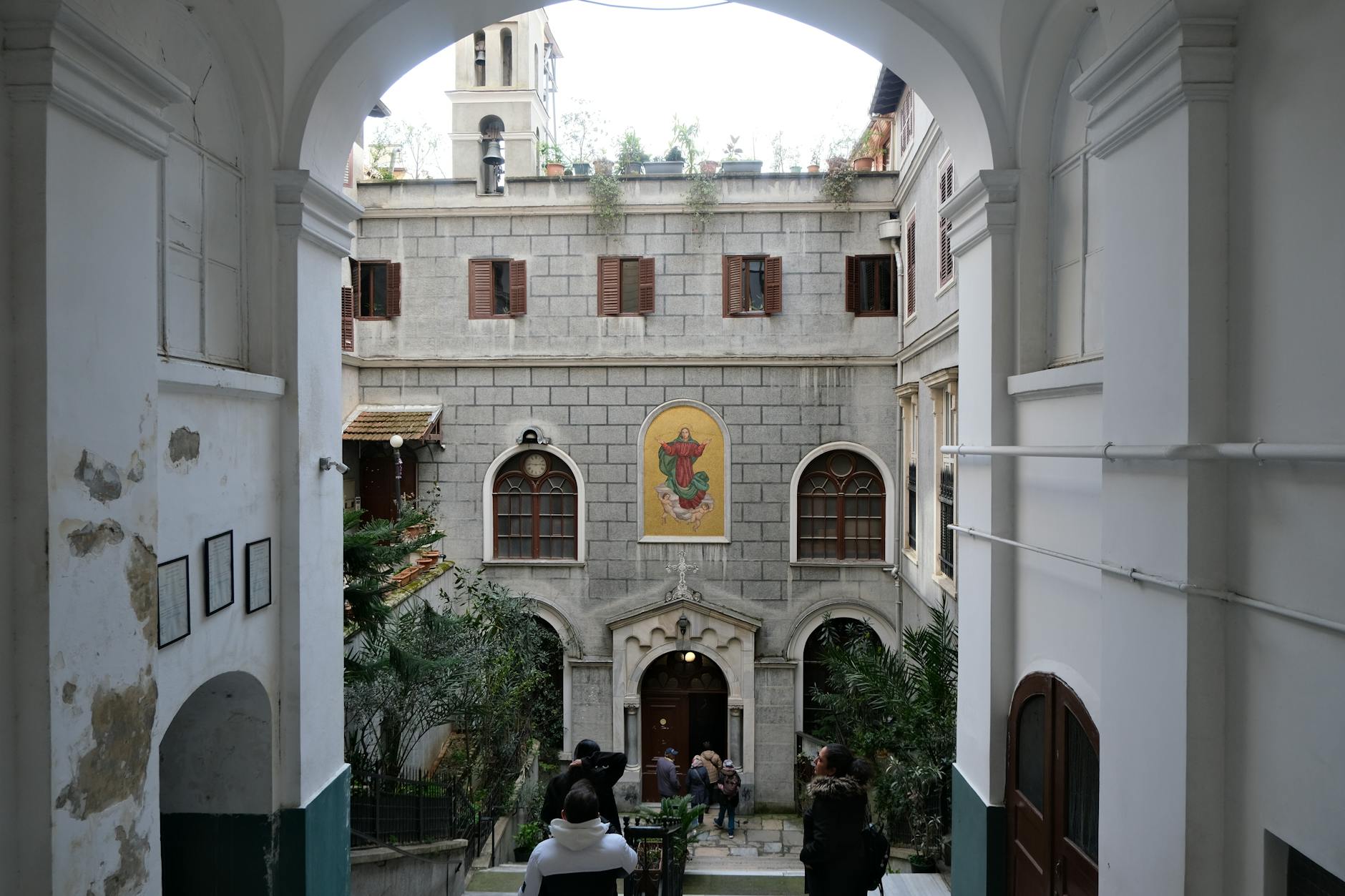
Navigating the Security Gate and Courtyard
Don’t let the unassuming side entrance on Dr. Sadık Ahmet Street fool you; the security here is tight but carries a heavy, respectful silence that sets the tone for the entire visit. I usually tell my friends to arrive no later than 9:15 AM to avoid the mid-morning rush; last Tuesday, the queue was only three people deep, but by 11:00 AM, the line often snakes toward the main road as the tour buses descend. You will pass through a standard X-ray machine and a metal detector. The guards are efficient and rarely speak more than necessary, maintaining a quiet professionalism that mirrors the somber history of the grounds.
The Shadow of Peter’s Gate
As you step into the courtyard, your eyes will naturally drift to the grand, central double doors of the Patriarchate. You’ll notice they are permanently welded shut and painted a stark, funereal black. This is the Peter’s Gate, and it serves as a silent memorial to Patriarch Gregory V, who was executed here in 1821 at the start of the Greek War of Independence.
Standing before it, the air feels different—colder, perhaps. It is a powerful reminder that for the Greek Orthodox community, this isn’t just a museum or a scenic stop; it is a site of deep, living memory. Out of respect, avoid posing for “touristy” selfies directly in front of this specific gate. Instead, take a moment to look at the intricate carvings before moving toward the actual entrance of the church.
The Humble Facade of St. George
The Church of St. George itself is famous for its architectural modesty. Because of Ottoman-era restrictions that prevented non-Muslim places of worship from looking more “grand” than local mosques, the exterior looks like a simple, three-aisle basilica. It’s a brick and stone structure that blends into the Fener hillside. However, the true “Istanbul secret” is the sensory shock you get when you step through the door.
The transition from the gray, weathered stone of the courtyard to the explosive gold leaf and dark wood of the interior is one of my favorite experiences in the city. If you feel overwhelmed by the sudden shift in opulence, just step to the right near the candle stands to catch your breath.
Essential Courtyard Etiquette and Logistics:
- Arrival Window: Aim for 9:00 AM to 10:00 AM. After 11:00 AM, the small courtyard feels cramped due to group tours.
- Dress Code: Ensure shoulders and knees are covered before you reach the security gate; while they have some wraps available, it’s better to be prepared.
- Candle Donations: If you wish to light a candle (a central part of the experience), have small bills ready. A donation of 50 TL (roughly 1 EUR) is a respectful minimum per candle.
- Photography: Photos are permitted in the courtyard and church, but never use a flash, as it damages the ancient icons and disturbs those in prayer.
- Silence is Mandatory: Even in the outdoor courtyard, keep your voice to a whisper. Sound bounces off the stone walls and carries directly into the Patriarchal offices.
The Gold and the Relics: Inside St. George
The interior of St. George is not about the grand, soaring scale of a cathedral; it is about the crushing density of history, gold-leaf, and the heavy, sweet scent of frankincense. When you step inside, especially if you arrive around 8:45 AM during the morning liturgy, the atmosphere is thick with a spiritual weight that you simply won’t find in the more museum-like structures of the city. I’ve stood in the back many times, watching the flickering candlelight dance against the 18th-century iconostasis, and it never fails to feel like a direct portal to the Byzantine past.
This iconostasis is a masterclass in wood carving. It’s made of walnut and layered in gold leaf, depicting intricate biblical scenes that seem to pulse under the dim chandeliers. St. George is vibrant, active, and intensely ornate. If the lighting is right, the gold glows with an amber hue that makes the entire front of the church look like it’s smoldering.
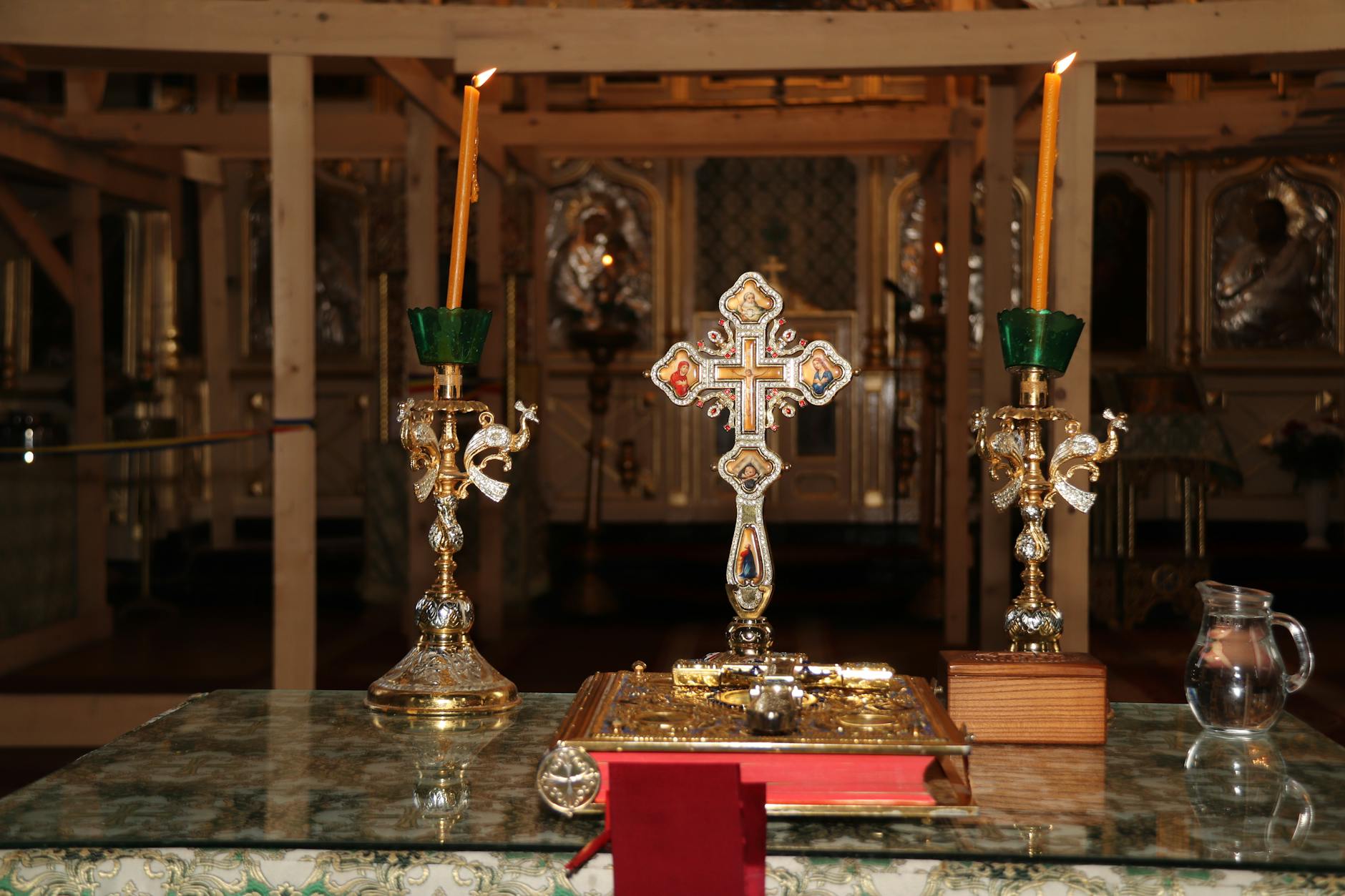
Sacred Fragments and the Pillars of Faith
To the right of the nave, you’ll find the relics that draw pilgrims from across the globe. The remains of three female saints—St. Euphemia, St. Theophano, and St. Solomone—rest in ornate silver caskets. Even if you aren’t religious, the reverence shown by locals who press their foreheads against the silver is a powerful thing to witness.
One detail most people overlook because they are dazzled by the gold is the Column of the Flagellation. Tucked in a corner, this humble piece of dark stone is said to be a fragment of the pillar where Christ was bound and whipped. It’s one of the most significant relics in Istanbul Orthodox history, yet it’s remarkably accessible—you can stand inches away from a piece of stone that has been venerated for nearly two millennia.
Berk’s Insider Tip: Arrive at the Church of St. George before 10:00 AM. By 11:30 AM, the large tour buses from the cruise ships arrive, and the small church interior becomes incredibly cramped and loses its spiritual hush.
Five Details You Cannot Miss Inside St. George:
- The 18th-century Iconostasis: Look closely at the micro-carvings in the walnut; the depth of the wood-work is staggering.
- The Patriarchal Throne: Traditionally attributed to the 10th century, this inlaid wood throne is a rare survivor of the Byzantine era.
- The Relics of St. Euphemia: The most prominent of the three female saints, her casket is a focal point for Eastern Orthodox pilgrims.
- The Column of the Flagellation: Located in the right aisle, it is one of the three known fragments of the pillar from Jerusalem.
- The Rare Byzantine Mosaics: Look for the mosaic icons of the Virgin Mary and St. John the Baptist, which survived the many fires that plagued the Fener district.
The 2026 Economics of a Visit
Budgeting for a day in Fener is remarkably simple because the Patriarchate remains one of the few world-class spiritual sites in Istanbul that doesn’t charge an entrance fee. I usually keep a few 50 TL notes tucked in my pocket specifically for this walk; I remember seeing a visitor last Tuesday trying to tap their credit card at the candle stand near the entrance of St. George, which unfortunately isn’t an option for these small, traditional gestures.
While entry is free, the local custom is to light a candle upon entering the narthex. You should expect to leave a donation of about 50 TL to 100 TL (roughly 1 to 2 EUR) in the boxes provided. With the current 2026 exchange rates of 1 EUR to 50 TL and 1 USD to 45 TL, even a small contribution goes a long way toward the meticulous upkeep of the gold-leaf iconostasis and the historic structure.
The surrounding neighborhood has seen prices rise, but it remains far more grounded than the tourist traps of Sultanahmet. A glass of tea in the colorful Fener cafes will generally run you between 40 TL and 60 TL. If an establishment tries to charge more than 80 TL for a basic çay, they are overpricing—simply walk two blocks further inland for a more authentic price point. For larger purchases or meals, you’ll find that managing your budget is easier if you save your Lira for these small street-level interactions and use your card for the sit-down bistros.
Budgeting for the Fener Waterfront
To help you plan your afternoon, here is a quick breakdown of what to expect for common expenses in the area:
| Item | Estimated Cost (TL) | Value in EUR/USD (Approx.) |
|---|---|---|
| Patriarchate Candle Donation | 50 – 100 TL | €1.00 – €2.00 / $1.10 – $2.20 |
| Tea (Çay) at a local cafe | 40 – 60 TL | €0.80 – €1.20 / $0.90 – $1.30 |
| Simit from a street vendor | 25 – 35 TL | €0.50 – €0.70 / $0.55 – $0.80 |
| Public Ferry (Istanbulkart) | 40 – 55 TL | €0.80 – €1.10 / $0.90 – $1.20 |
One minor frustration is the lack of reliable ATMs directly in the narrowest cobblestone streets of Fener. To avoid getting stuck, withdraw your cash near the Eminönü transit hubs before boarding the ferry or bus; it ensures you have the exact change ready for those small, meaningful donations inside the church.
Uphill to the Red Castle: Climbing Fener
If you leave Fener without your heart rate hitting 120, you haven’t actually seen the neighborhood. The climb from the Patriarchate to the summit of the hill is more than a workout; it’s a transition from the quiet, incense-heavy air of the church to the raw, domestic life of the old city. I’ve seen countless tourists stop halfway up Sancaktar Yokuşu, gasping for air while a local grandmother carrying two bags of groceries breezes past them. It’s humbling, to say the least.
Last July, I made the mistake of wearing flat-soled dress shoes on Sancaktar Yokuşu at 1:00 PM; the smooth stones were so slick I nearly took a slide into a pile of recycling. Wear sneakers with actual grip.
Berk’s Insider Tip: Don’t bother with the high-priced ‘terrace’ cafes right next to the Patriarchate entrance. Walk three blocks deeper into the Balat backstreets for better coffee at half the price (around 70 TL for a latte instead of 140 TL).
The architectural payoff at the top is the Phanar Greek Orthodox College, a massive, blood-red brick structure that looms over the Golden Horn. Most people mistake it for a castle or a fortress—I’ve even heard visitors calling it “the Hogwarts of Istanbul.” In reality, it’s a school, and the sheer scale of it against the skyline is unmatched in this part of town. If you find the climb too punishing, take it slow and look back often; the way the terracotta roofs of Fener frame the water below is reminiscent of the Zeyrek Istanbul: Old City district, though with a distinctly more Mediterranean, Rum (Greek) aesthetic.
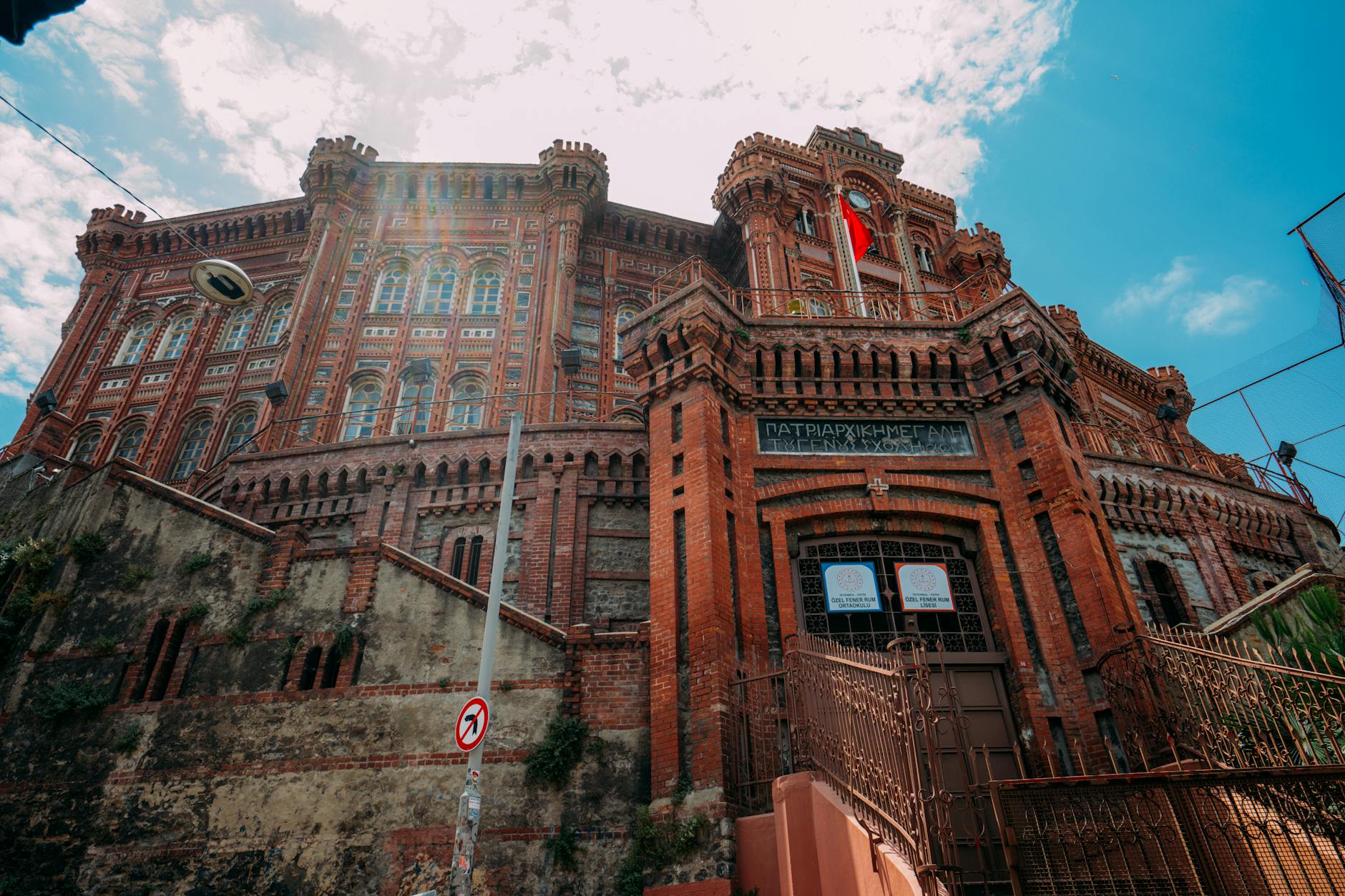
Navigating the Ascent to the Red School
Finding the best angle for a photo can be tricky because the streets are so narrow. I recommend walking a bit further past the main gate to find the gaps between the buildings where the school’s “castle” turrets pop against the blue sky. To get there without getting lost in the labyrinth, follow these specific steps:
- Exit the Ecumenical Patriarchate’s main gate and immediately turn left onto the main street.
- Walk approximately 50 meters until you see the first significant opening on your right.
- Turn right onto Sancaktar Yokuşu, which is the steep, cobbled incline leading upward.
- Maintain a steady pace and stick to the narrow sidewalk to avoid the occasional local van squeezing through.
- Stop at the top of the first steep section to look back and catch the view of the Golden Horn before the buildings close in.
- Arrive at the massive red brick gates of the Phanar Greek Orthodox College (the “Red School”) at the crest of the hill.
The Waterfront Loop: From Fener to Balat
Walking away from the Patriarchate toward the water is the only way to shake off the heavy, incense-laden atmosphere of the church and find some literal breathing room. I always tell my friends to skip the inland alleys for a moment and hit the Golden Horn Waterfront green belt. This strip was once a bit of a neglected mess, but the recent renovations have turned it into a breezy, paved path that connects Fener’s history to Balat’s chaos. It’s the best way to avoid the tour bus exhaust on the main road while keeping the water in sight.
The Steel Sentinel: Sveti Stefan
You’ll spot the Bulgarian Iron Church (Sveti Stefan) about five minutes into your walk, and it is a total visual palate cleanser. While St. George is all about ancient stone and Byzantine mystery, Sveti Stefan is a 19th-century “pre-fab” marvel made entirely of cast iron. I remember taking an architect friend here last spring; we spent twenty minutes just tapping the exterior walls to hear the hollow metallic ring. It’s the perfect 15-minute contrast—bright, neo-Gothic, and surprisingly ornate for something shipped in pieces on a barge from Vienna. It is free to enter, though the interior can get cramped on weekends; try to duck in before 11:00 AM to catch the light hitting the gilded altar without a crowd in your frame.
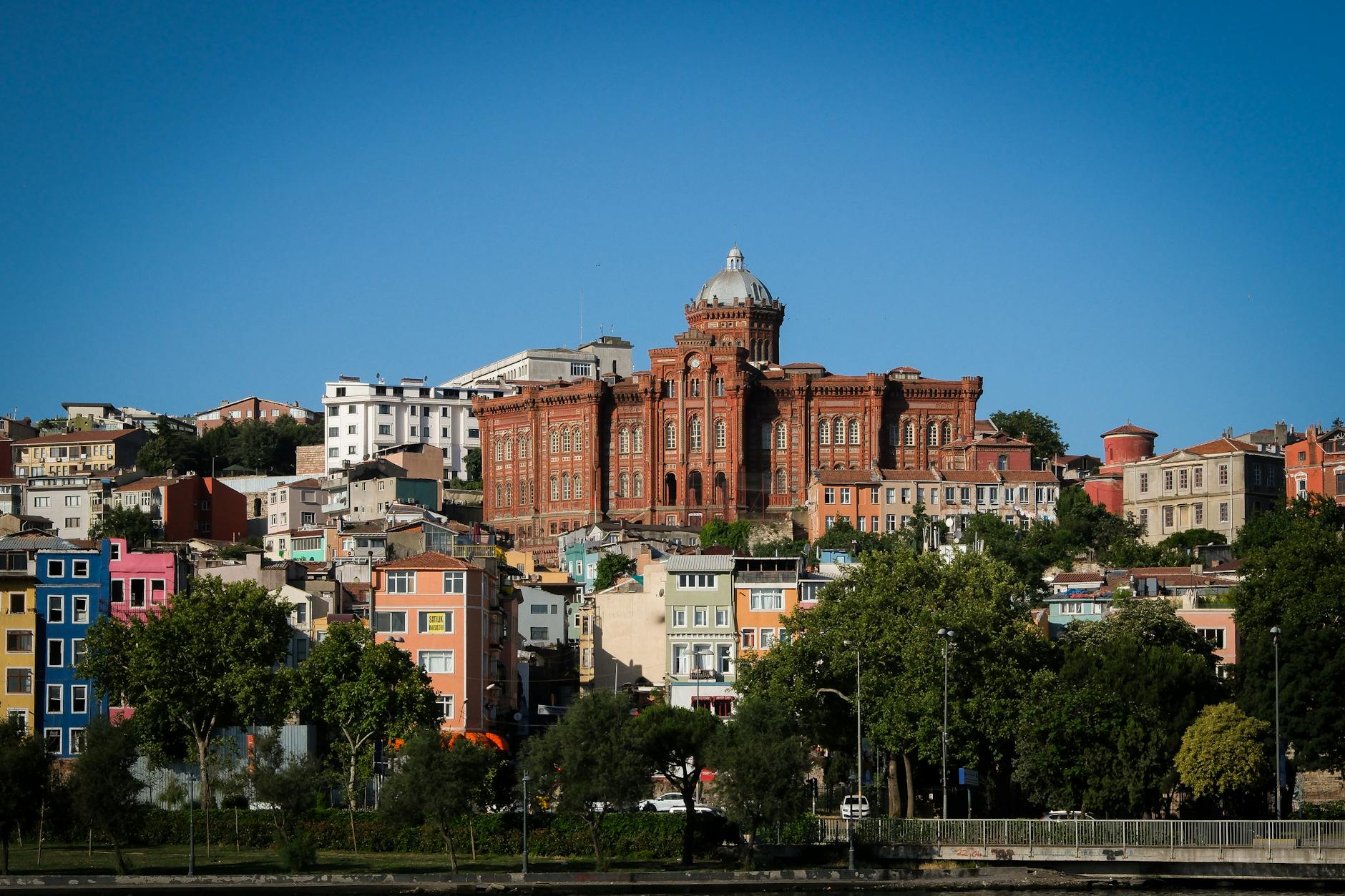
Crossing into Balat’s Gritty Charm
Keep walking north and the manicured grass of the waterfront eventually gives way to the narrow, uphill arteries of Balat. This is where the polished tourist facade drops. If you’ve timed your walk right, you’ll stumble right into the heart of the weekly neighborhood street markets with 2026 produce prices and shopping tips, where the air smells of fresh parsley and brine rather than old wood.
The transition can be a bit of a sensory shock—the streets get narrower and the shouting vendors louder. My trick to handling the “gritty” side of Balat is to grab a 50 TL (exactly 1 EUR) glass of tea from a plastic-stool tea house and just watch the logistics of the neighborhood unfold. This area is the real deal; you’ll see local grandmothers haggling over seasonal produce while laundry hangs precariously three stories above your head. It’s loud and unpretentious, providing the exact shot of local energy you need after the quiet sanctity of the Patriarchate.
A Moment by the Water
Leaving the gates of the Patriarchate feels like stepping through a temporal rift. One minute you are wrapped in the hushed, incense-heavy air of the 17th century, and five minutes later, you are dodging a delivery moped on a cobblestone street where laundry lines are strung between decaying Ottoman timber houses and vibrant, neon-lit cafes. That 200-meter stretch from the courtyard of St. George down to the Golden Horn is Istanbul in its most honest form—layered, slightly bruised, and stubbornly alive.
It is easy to get overwhelmed by the sheer weight of the history here, so do yourself a favor and don’t rush back to the Eminönü chaos immediately. Walk across the coastal road to the small green pocket near the Fener ferry terminal. I spent twenty minutes there last Thursday, just watching the wake of a passing Vapur hit the rusted sea walls while the red bricks of the Phanar Greek College glowed in the late afternoon sun.
Sitting there allows the silence of the church to settle before the city’s noise takes over again. If you’re thirsty, the small tea stand by the pier charges about 25 TL (exactly 0.50 EUR) for a glass of tea. It’s a tiny price to pay for a front-row seat to the most complex neighborhood in the city. Fener isn’t a museum meant to be “finished”; it’s a place to be felt, and it usually requires a moment of quiet by the water to truly sink in.