
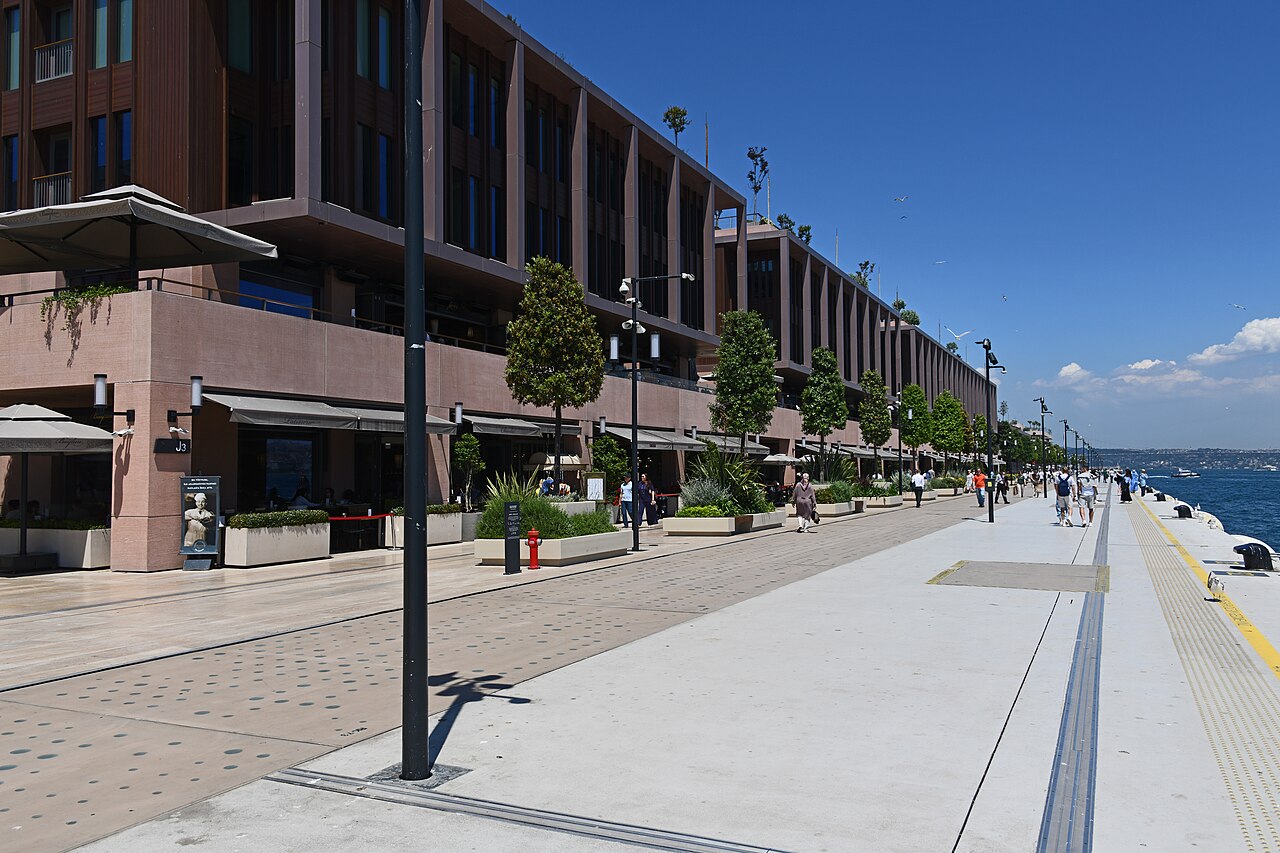
What Is Galataport?
Galataport is the world’s first underground cruise terminal, built along a 1.2-kilometer stretch of Istanbul’s Karaköy waterfront. Since opening in 2021, it has transformed what was once a restricted port zone into a publicly accessible promenade with restaurants, shops, art galleries, and the Istanbul Modern museum.
The engineering achievement is remarkable — the cruise ship terminal sits entirely below ground, meaning passengers disembark through underground corridors and emerge directly onto the city streets. The waterfront above remains open to the public even when a massive cruise liner is docked just meters away.
But the real question for visitors is practical: what happens to the city when 3,000 to 5,000 cruise passengers pour into central Istanbul at 8 AM?
💡 Insider Tip: I track cruise ship arrivals using the Galataport website’s schedule. On days when two large ships dock simultaneously, I avoid Sultanahmet entirely before noon and head to the Asian side instead. The difference in crowd levels is staggering.
How Cruise Days Affect the City
During the 2025 cruise season, Galataport hosted over 1.5 million passengers — a record year. In 2026, the numbers are expected to climb even higher, with Istanbul now positioned as a home port (where cruises begin and end) rather than just a transit stop.
Here’s what typically happens on a busy cruise day:
The Morning Rush (8:00–10:00 AM)
Cruise passengers disembark and fan out into organized tour groups or independent walking routes. The immediate area around Tophane, Karaköy, and the Galata Bridge gets significantly busier. Tour buses line up along the coastal road heading toward Sultanahmet.
The Sultanahmet Effect (10:00 AM–2:00 PM)
Most cruise excursions follow a predictable route: Hagia Sophia → Blue Mosque → Grand Bazaar → Topkapı Palace. This means these sights experience their heaviest crowds between late morning and early afternoon on cruise days. Queue times at Hagia Sophia can double.
The Afternoon Scatter (2:00–5:00 PM)
By mid-afternoon, cruise passengers spread across the city — some return to the ship, others explore independently. The Spice Bazaar, İstiklal Avenue, and the Galata Tower see increased foot traffic during this window.
The Evening Calm (After 6:00 PM)
Most cruise ships require passengers back by 5:00–6:00 PM for evening sailings. Once the ship departs, the waterfront returns to its usual rhythm and Sultanahmet empties noticeably.
How to Plan Around Cruise Days
You don’t need to avoid cruise days — you just need to time your sightseeing intelligently:
| Time | Strategy |
|---|---|
| Before 9:00 AM | Visit Sultanahmet sights before cruise passengers arrive |
| 10:00 AM – 2:00 PM | Head to the Asian side (Kadıköy, Üsküdar) or neighborhoods off the cruise route (Balat, Fener) |
| After 5:00 PM | Return to Sultanahmet and Karaköy for a quieter experience |
Check the schedule: Galataport publishes its cruise schedule online. A 30-second check the night before your visit can save you hours of queue time.
💡 Insider Tip: The smartest move on a heavy cruise day is to explore neighborhoods that tour buses can’t reach. Balat’s colorful streets, Kuzguncuk’s village atmosphere, and Moda’s coastal walk are completely unaffected by cruise traffic — and they’re some of the most rewarding parts of Istanbul.
Galataport as a Destination Itself
Beyond its function as a cruise terminal, Galataport is worth visiting in its own right:
- Istanbul Modern — Turkey’s premier contemporary art museum relocated here in 2023, designed by Renzo Piano
- Waterfront dining — restaurants line the promenade with direct Bosphorus views
- The public walkway — a beautiful 1.2 km stretch connecting Karaköy to Tophane, free and open to everyone
- Weekend atmosphere — locals use the promenade for evening walks, and the sunset views toward the Princes’ Islands are exceptional
The area is especially pleasant on weekday evenings when cruise ships have departed and the promenade belongs to Istanbul residents again.
The Bigger Impact on Istanbul Tourism
Galataport has fundamentally changed how Istanbul handles mass tourism. By funneling cruise passengers through a single entry point in central Istanbul rather than through the old distant port in Zeytinburnu, the city has gained a more walkable, integrated cruise experience — but it has also concentrated pressure on an already busy historic center.
For independent travelers, the key takeaway is awareness. Knowing when cruise ships are in port gives you a strategic advantage that most visitors simply don’t have.
Skip the Cruise Crowds with a Private Tour
One of the best ways to navigate Istanbul on a busy cruise day is with a local guide who knows when and where to go. We run private walking tours designed around exactly this kind of local knowledge — timing sights to avoid peak crowds, using back routes, and showing you the neighborhoods that tour buses simply cannot reach.
If the Sultanahmet cruise rush sounds overwhelming, our Tour 3: Heart of History – Treasures of Sultanahmet takes you through Hagia Sophia, the Blue Mosque, and the Hippodrome on a timed route that sidesteps the worst congestion.
Prefer to escape the cruise corridor entirely? Our Tour 4: Fener & Balat – The Colorful Bohemian Soul of Istanbul explores the neighborhoods mentioned above as crowd-free alternatives — colorful streets, centuries-old churches, and a completely different side of the city.
For a full-day experience that covers both the historic highlights and the hidden flavors, Tour 1: The Essential Istanbul combines Topkapı Palace, the Grand Bazaar, and the Spice Bazaar with real local food stops along the way.
Interested? Browse all our tours and book your spot →