Let me be direct: the single most common question I get from people planning an Istanbul trip is not about the Blue Mosque or the best kebab — it is “Is it safe?” After fifteen years of living here, guiding friends through every district, and navigating the city at all hours, I can give you a simple answer: yes, Istanbul is safe for tourists in 2026, and in many ways it feels safer than cities like Paris, Rome, or Barcelona for the average visitor.
But “safe” is a word that deserves nuance, not just a thumbs-up emoji. This city has 16 million people, a complex political neighborhood, and a geography that straddles two continents. So let me break down what safety actually looks like on the ground — the real risks, the overblown fears, and the practical steps that separate a confident traveler from a worried one.
The Big Picture: Istanbul vs Other Major Cities
Let’s start with context. Istanbul’s violent crime rate is significantly lower than most Western European capitals. You are statistically less likely to be mugged in Beyoğlu than in Montmartre or the Gothic Quarter of Barcelona. The city has a very visible police presence, especially around tourist areas, and Turkish culture generally has a strong sense of public safety and community watchfulness.
The headlines you read in international media about Turkey almost always refer to the southeastern border region or political tensions that have zero impact on daily life in Istanbul. The city hosted over 20 million international visitors in 2025, and the vast majority left with nothing worse than a sunburn and an overstuffed suitcase.
Berk’s Insider Tip: If you’re worried about the regional situation, remember this: Istanbul is closer to Athens, Sofia, and Bucharest than it is to any conflict zone. The distance from Istanbul to the Syrian border is roughly the same as London to Edinburgh.
Neighborhood Safety: Where You Can Relax
The Safest Districts for Tourists
These areas are patrolled, well-lit, and full of other travelers and locals at all hours:
- Sultanahmet — The historic heart. Heavy police presence, tourist-focused, extremely safe day and night.
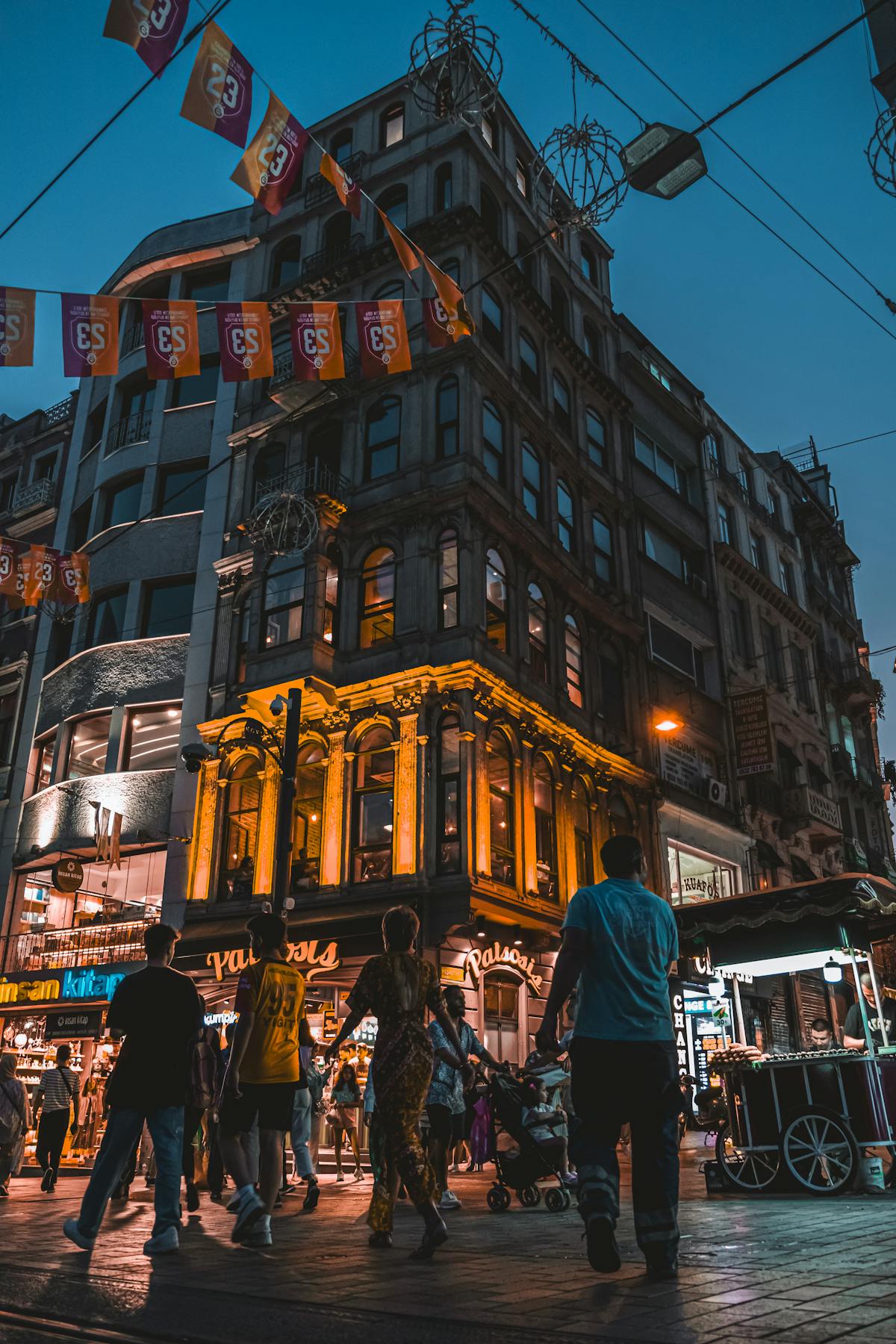
- Beyoğlu / Taksim / İstiklal — Busy at all hours. The main risk here is pickpockets on the crowded avenue, not violent crime.
- Kadıköy / Moda — The Asian-side gem. Young, liberal, lively until 2 AM. One of the safest neighborhoods in the entire city.
- Beşiktaş — University area, football fans, vibrant nightlife. Safe and very local.
- Cihangir — The bohemian hilltop district. Expat-friendly, quiet streets, excellent for solo travelers.
- Karaköy / Galata — Trendy, well-lit, full of cafes and galleries. Safe for evening walks.
- Üsküdar — Conservative, family-oriented, extremely low crime. Safe at all hours.
- Balat / Fener — The colorful Instagram district. Safe during the day; quieter at night but no real risk.
Areas With Less Tourist Infrastructure
These aren’t “dangerous” — they’re just residential working-class districts where there’s nothing for a tourist to see:
- Esenyurt, Bağcılar, Esenler — Far from the center, dense population, no attractions. Skip them.
- Tarlabaşı — The streets directly behind İstiklal Avenue can feel rough after midnight. Walk through quickly or take a side street.
The Real Risks: What to Actually Worry About
1. Pickpockets (Low-Medium Risk)
The most common crime affecting tourists. Hotspots include:
- İstiklal Avenue — especially on weekends when it’s packed shoulder-to-shoulder
- The Grand Bazaar — crowded, chaotic, and full of distractions
- Eminönü and the Galata Bridge area — heavy foot traffic near the ferry terminals
- Public transport — the T1 tram during rush hour
How to protect yourself: Front pockets or a cross-body bag. Don’t keep your phone in your back pocket. Be extra alert when someone “accidentally” bumps into you or creates a commotion.
2. Taxi Scams (Medium Risk)
This is probably the single biggest annoyance for Istanbul visitors. We’ve written a complete guide to Istanbul taxi scams that covers every trick in detail, but the short version is:
- Always insist on the meter. If the driver refuses, get out.
- Use BiTaksi or Uber to pre-set your route and avoid negotiation.
- Know the rough fare before you get in. Sultanahmet to Taksim should be around 200-250 TL.
- Watch for the “long route” — drivers taking the highway when the city road is faster.
3. Overcharging at Restaurants (Medium Risk)
Some restaurants in Sultanahmet and along İstiklal don’t display prices or add mysterious “service charges.” Always:
- Ask for a menu with prices before sitting down.
- Check the bill line by line.
- Avoid restaurants where a guy is aggressively waving you in from the sidewalk — the food is usually terrible anyway.
4. Fake Shoe-Shine Trick (Low Risk)
A man “accidentally” drops his shoe-shine brush in front of you. You pick it up, he thanks you, then insists on shining your shoes — and demands an outrageous fee. Just walk away. This is mainly around Sultanahmet and the Galata Bridge.
5. The Friendly Bar Scam (Low Risk but Expensive)
A local approaches you — usually on İstiklal — and strikes up a friendly conversation. “Hey, where are you from? Let me show you a great bar!” You end up in a bar where the drinks cost 5,000+ TL each, and large men discourage you from leaving without paying. This almost exclusively targets solo male travelers.
How to avoid it: Never follow a stranger to a bar. Choose your own venues. If it sounds too friendly too fast, it probably is.
Solo Travel and Women’s Safety
Istanbul is one of the more manageable cities for solo travelers. The public transport is excellent and safe at all hours, the food scene is incredible for solo diners, and Turkish hospitality means you’re more likely to be offered an extra cup of tea than to encounter hostility.
For women specifically:
- The main tourist and residential districts are very safe, including at night.
- Turkish men can be more forward with compliments than you might be used to — a firm “no” or simply ignoring it is usually enough.
- Dress codes are relaxed in most of Istanbul. You’ll see everything from miniskirts in Kadıköy to headscarves in Fatih. Wear what you’re comfortable in.
- Mosques require covered shoulders, knees, and hair — scarves are provided free at the entrance.
- If you ever feel uncomfortable, walk into any shop or restaurant. Turkish shopkeepers are protective of visitors by instinct.
Earthquake Awareness
This is the one risk that statistics actually support. Istanbul sits on the North Anatolian Fault, and seismologists have long warned about a major earthquake. In practical terms:
- Choose newer buildings for accommodation when possible — anything built after 2000 is generally earthquake-code-compliant.
- Note the exits in your hotel.
- Keep a small bag with your passport, phone, and cash near the bed.
- Don’t panic about it. Millions of people live here every day. Preparedness is smart; paranoia is pointless.
Health and Medical Safety
Istanbul has excellent private hospitals that rival anything in Western Europe. In an emergency:
- 112 is the national emergency number.
- Acibadem, Memorial, and Florence Nightingale are the top private hospital chains — English-speaking staff, modern facilities.
- Public hospitals are fine for emergencies but can be crowded and chaotic.
- Pharmacies (Eczane) are everywhere and can sell you most medications over the counter. Check our pharmacy guide for details.
Practical Safety Tips for 2026
- Download BiTaksi — it’s the best way to avoid taxi problems.
- Get an Istanbulkart — load it up and use public transport. It’s safe, cheap, and efficient.
- Keep a photo of your passport on your phone — leave the original in the hotel safe.
- Learn three Turkish words: “Hayır” (no), “Teşekkürler” (thanks), and “Yardım” (help).
- Stay on well-lit main streets after midnight in unfamiliar areas.
- Don’t flash expensive jewelry or electronics in very crowded areas like the Grand Bazaar.
- Trust your instincts. Istanbul is warm and welcoming, but if a situation feels wrong, just leave.
The Bottom Line
After 15 years here, I feel safer walking home at 2 AM in Kadıköy than I ever did in most European capitals. Istanbul’s biggest “danger” is honestly the food — once you taste a proper İskender kebab, your home cooking will never feel the same again.
Come prepared, stay smart, and you’ll discover what millions of visitors already know: Istanbul isn’t just safe, it’s one of the most genuinely welcoming cities on the planet.